
Spring and early summer are busy times for our freshwater turtles.
You may spot them leaving the water, crossing roads or searching for a place to nest. A few simple actions can make a big difference.
Meet Greater Shepparton’s three freshwater turtles
Our rivers, wetlands and lakes are home to three distinctive species.
Knowing who you’ve spotted can help community conservation efforts.

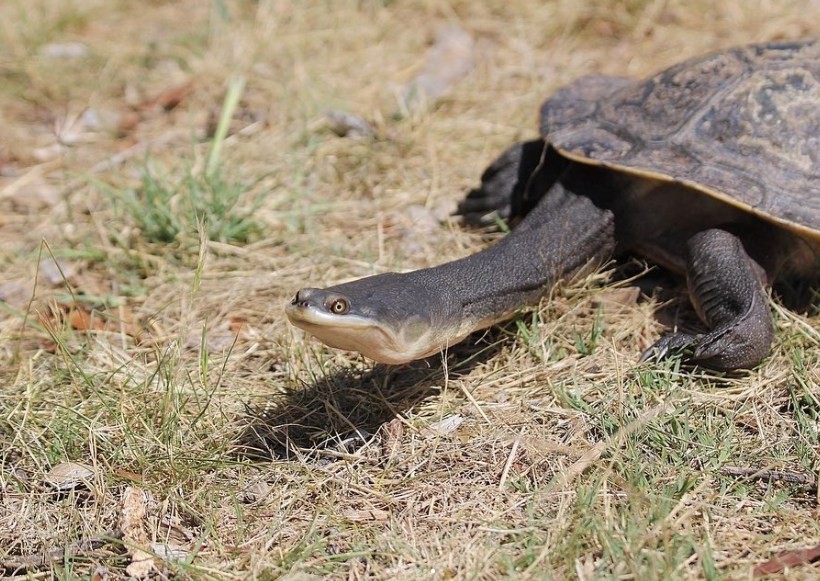
Eastern Long-Necked Turtle
Chelodina longicollis
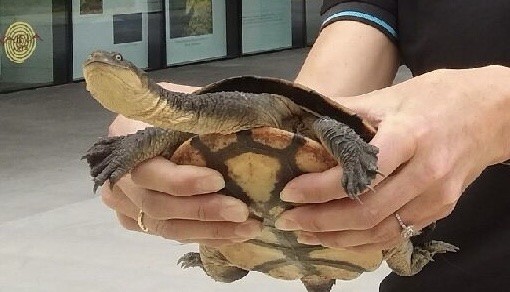
Recognisable by its long, narrow neck and distinct black markings on the plastron (underside). Commonly seen on land as this freshwater turtle can travel between waterways, especially when conditions trigger movement and nesting.
The long-necked turtle is the smallest of our three local species. Males can weigh close to 1 kg, while females can grow to more than 1.5 kg.
Eastern Long-Necked Turtles are listed as potentially vulnerable in Victoria.
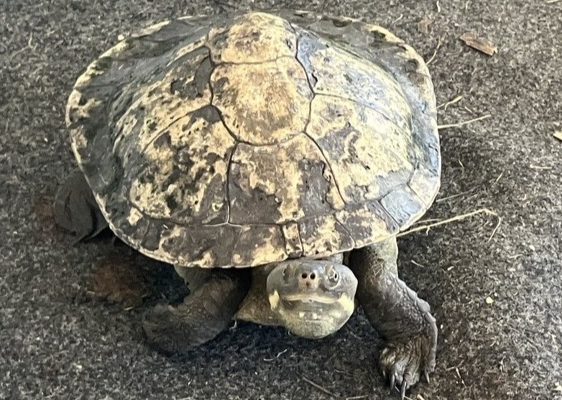
Broad-Shelled Turtle
Chelodina expansa
The broad-shelled turtle is the largest of the three local species. It has the longest neck of any turtle in the world! It is most closely associated with permanent, deeper water so it is rarely found on dry land.
They are easy to tell apart from Eastern long-necked turtles because the plastron (underside) is narrow and lacks the distinct black lines between the scutes. The plastron does not cover the legs, head and tail when they are retracted.
Females may exceed 5kg in weight, whereas males can reach almost 4kg.
Broad Shelled Turtles are listed as endangered in Victoria.

Murray River Turtle
Emydura macquarii
Also known as the Murray short-necked turtle, this turtle is easy to recognise by its olive-green or bronze shell, cream-coloured plastron (underside) and distinctive creamy-yellow stripe along the side of its head.
And its name gives away another clue: its neck is much shorter than those of other freshwater turtles in our region!
Males can grow to around 2.2 kg, while the larger females can weigh more than 4 kg.
Murray River Turtles are listed as endangered in Victoria.
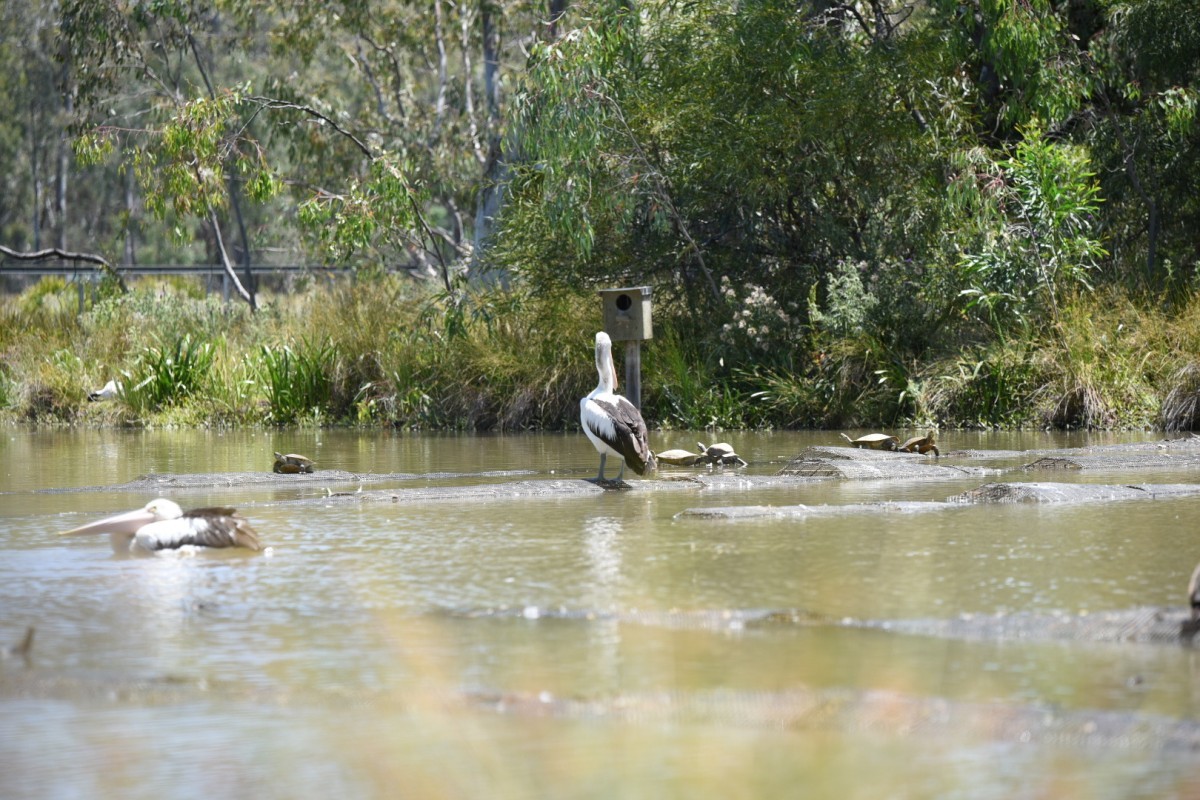
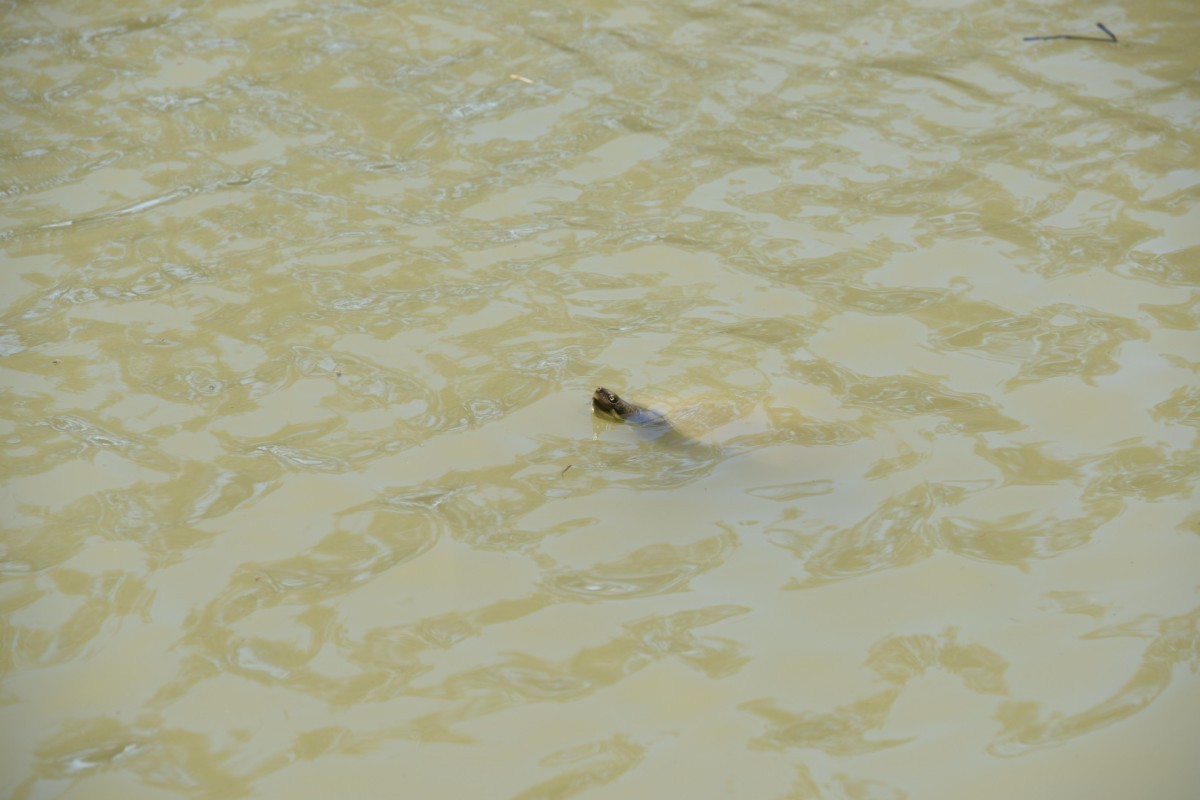
Is it a stick or a turtle?
If you spot a turtle on the road
- Your safety comes first. Only stop if it is safe to do so and be alert to traffic.
- If safe, carefully pick up the turtle from above, holding the front and back of its shell. Keep it away from your body to avoid its claws. Be aware that turtles may also release a rather pungent fluid when they feel threatened, which can be a defensive secretion from their glands, or sometimes simply wee!
- Move it off the road in the same direction it was already travelling. Turning it around may cause it to try crossing again.
- If suitable water is only a few metres away, you can move it there. If the water is far away, simply move the turtle out of immediate danger.
Injured, unwell or unresponsive? Contact Wildlife Victoria on (03) 8400 7300 for rescue or advice. Never take a native turtle home.
If you spot a turtle nesting
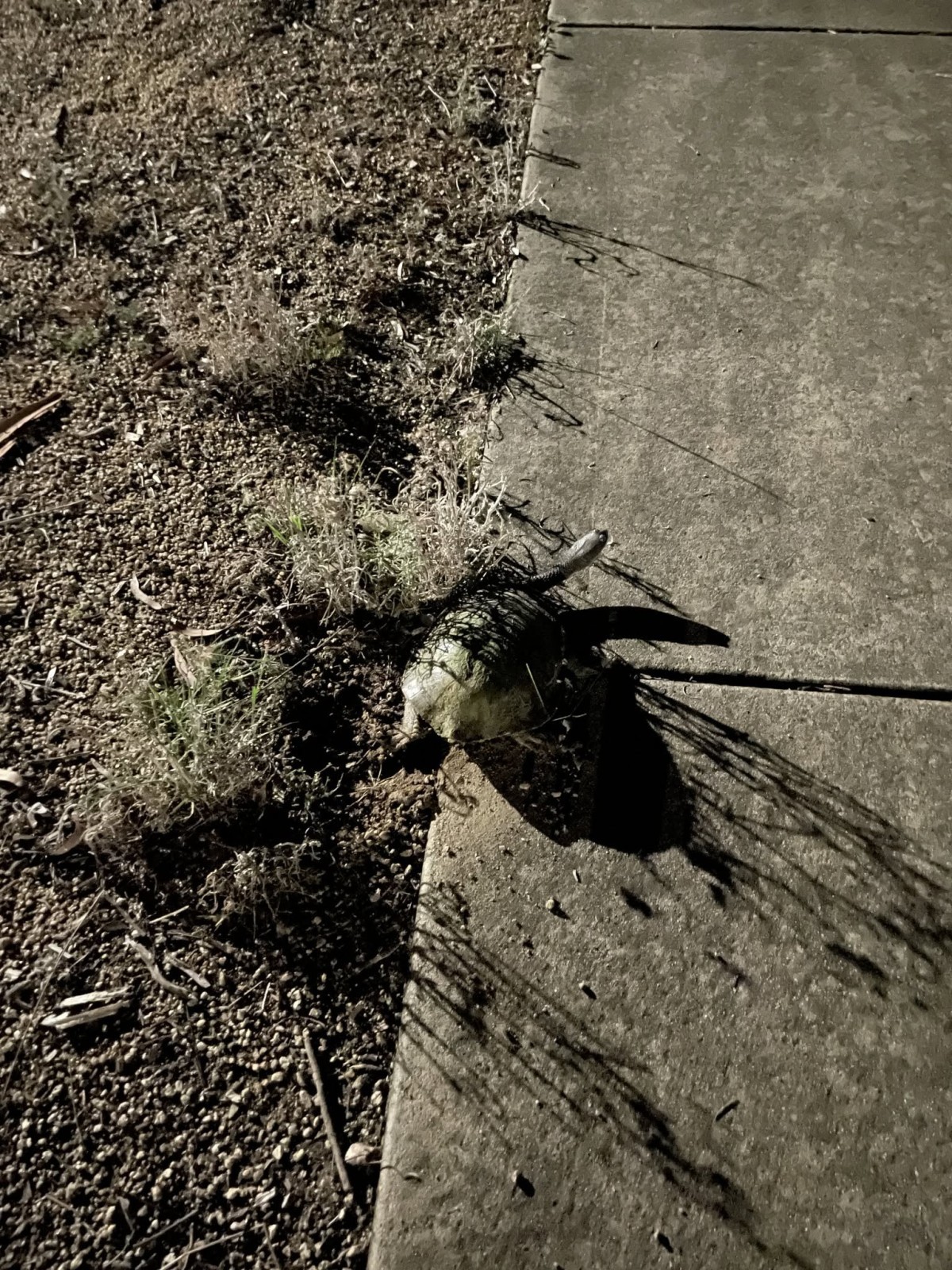
- Keep your distance and do not disturb her. If you can safely do so, watch over her until she finishes.
- Once she has left, record the exact nest location and take a photo.
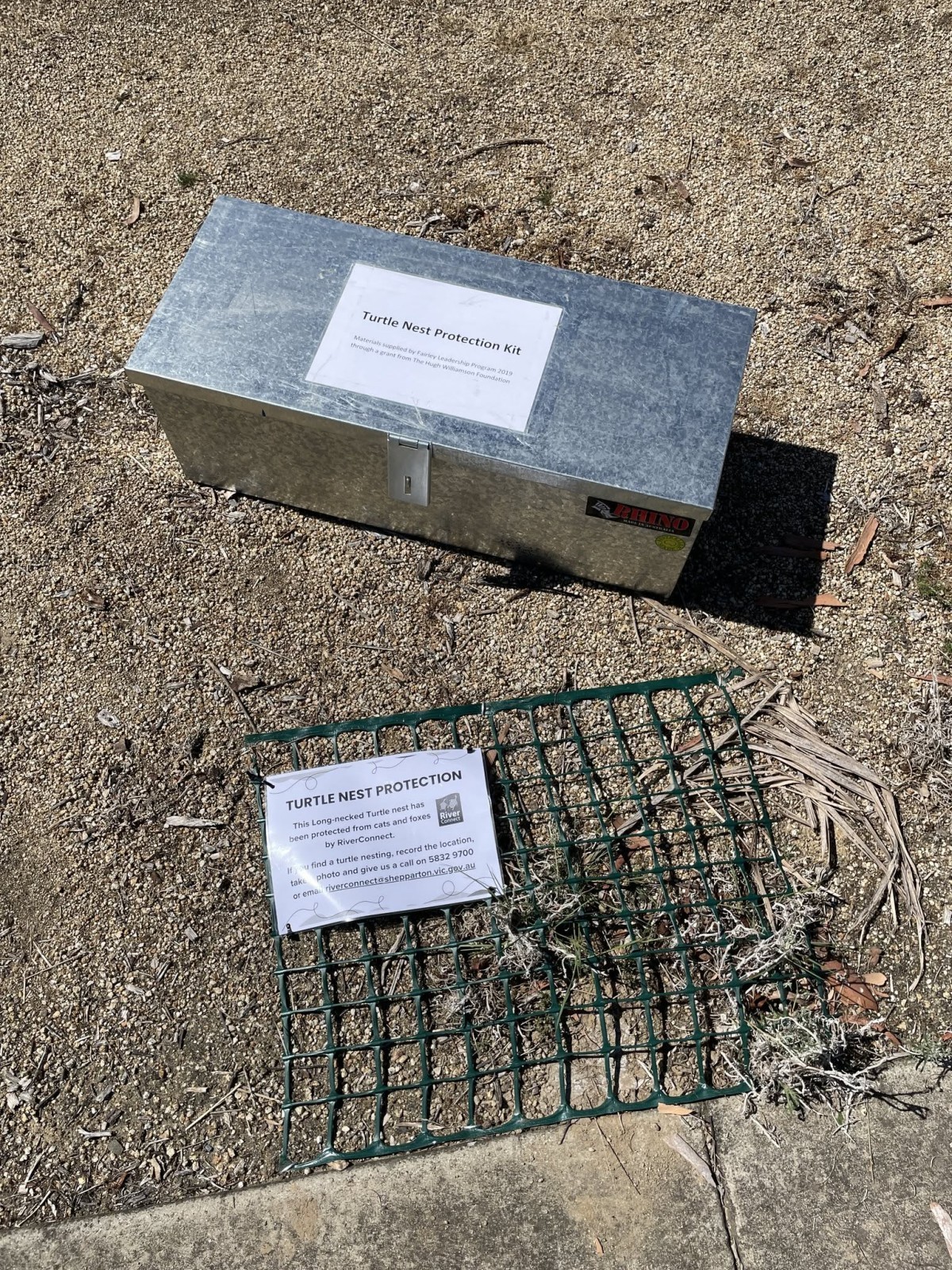
- Contact RiverConnect on (03) 5832 9700 or riverconnect@shepparton.vic.gov.au so the team can arrange nest protection.
Found turtle eggs? Leave them where they are. Report the location to Wildlife Victoria on (03) 8400 7300.
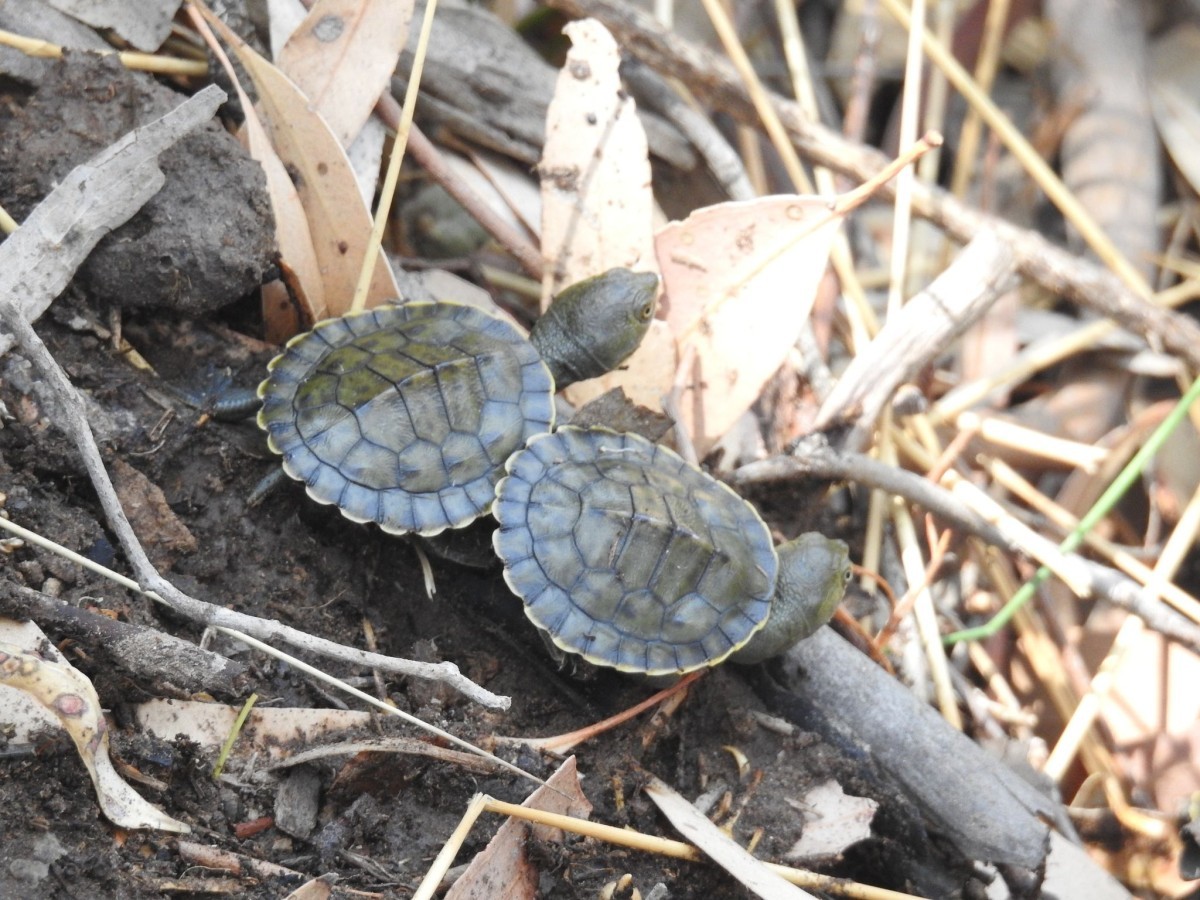
If you find a hatchling turtle, pick the hatchling up and place it in fringing vegetation in the nearest suitable water body. Please do not take it home – it is illegal to remove native animals from the wild.
Turtle Survey and Tracking
Australia’s freshwater turtles are under threat, and every sighting can help.
Threats such as drought, fox predation and human activity are contributing to declining turtle populations. By recording turtles, nests, road crossings, turtle deaths or other signs of turtle activity, you can provide valuable information to help researchers and land managers protect turtles into the future.